The Problem
In America, routine traffic stops are anything but routine when you're Black. Black drivers are 20% more likely to be stopped and searched — and three times more likely to be killed by officers during those encounters. From the smallest microaggression to murder, the data is undeniable.
And yet the conversation has been met with dismissal, deflection, and inaction for decades. The Courageous Conversation Global Foundation needed something that made this impossible to ignore—something that forced people to sit with a truth they had gotten very good at looking away from.
The Insight
The Detroit Auto Show is one of the most-watched stages in American culture — where innovation, aspiration, and engineering excellence are put on display for the world. It's where America celebrates the car. But for Black Americans, the car is a site of fear, not freedom.
What if we used that same stage — the glamour, the press, the entire cinematic language of a luxury car reveal — to show what a car would look like if it was actually designed for the reality of being Black in America? Not for performance. Not for comfort. For survival.
We hope this campaign will spark action and compel people to get involved in transforming the problematic relationship shared between police and Black Americans.— Glenn Singleton, Chairman, Courageous Conversation Global Foundation
The Strategy
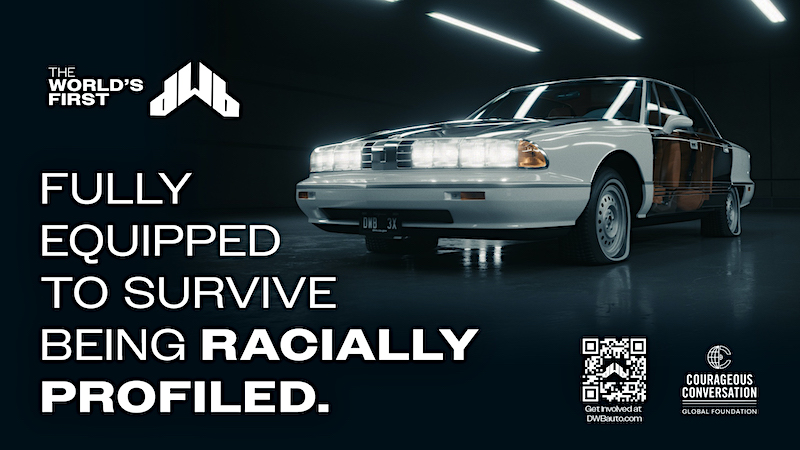
We hijacked the car launch format — the most aspirational, cinematic ritual in product marketing — and turned it into a mirror. The DWB was treated like any other new model reveal: a world-premiere film, a dedicated campaign site (DWBAuto.com), an AR experience on the Auto Show floor, and press coverage primed to ignite conversation globally.
The creative brief was deliberately counterintuitive: make it beautiful. Make it desirable. Use every visual convention of luxury automotive advertising — and let the contrast between the form and the content do the work. The more it looked like a real car reveal, the more devastating the truth of each feature became.
The campaign was strategically timed to the Detroit Auto Show, seeding earned media from the industry press before expanding to general audiences. An AR activation let attendees experience the car in real-time — not just hear about it, but inhabit the perspective of what it's like to drive while Black.
We want to change the narrative around Black folks and traffic stops. Basically, to make routine stops more routine for us.— Rony Castor, Creative Director, Goodby Silverstein & Partners
The Car
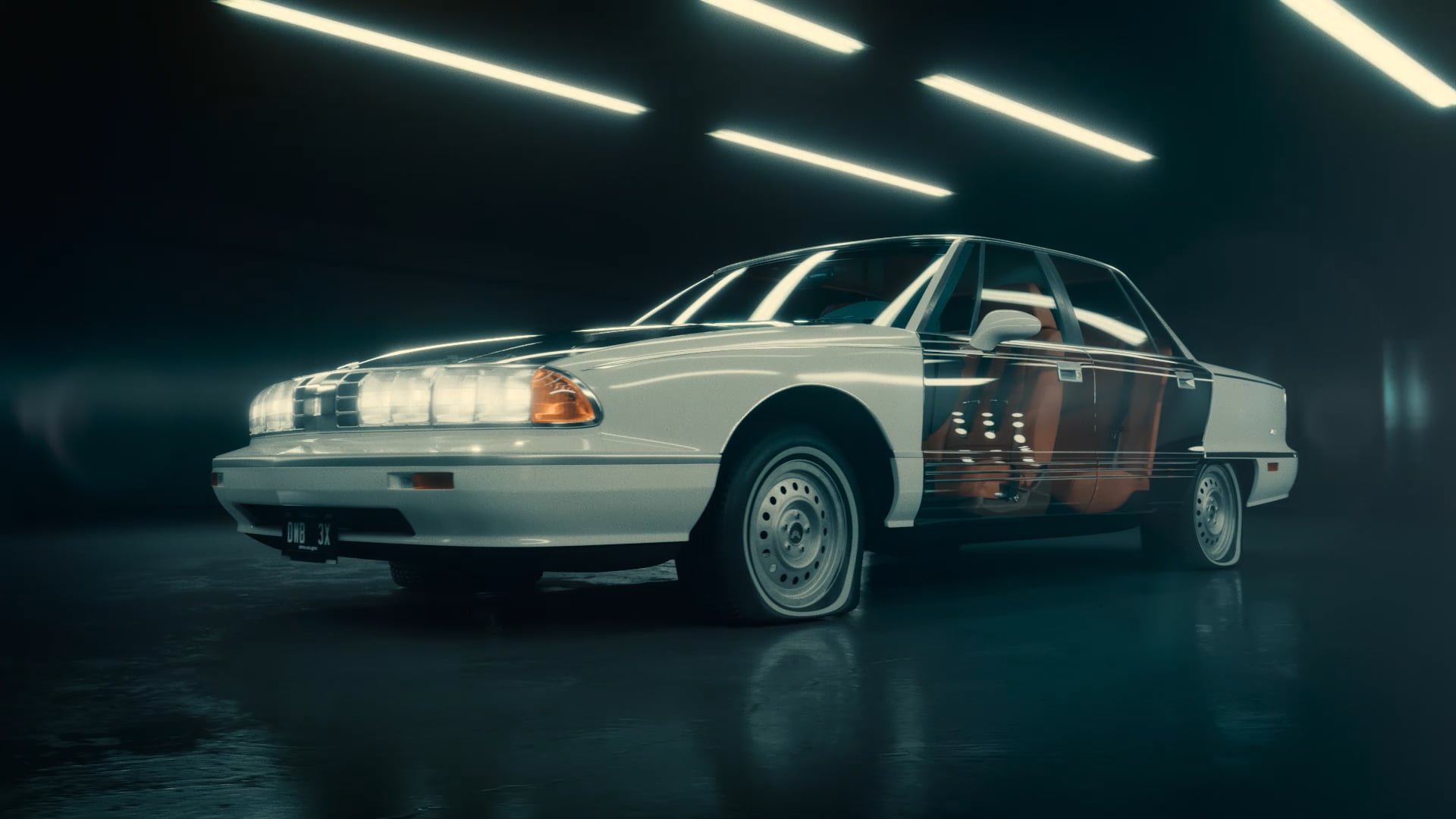
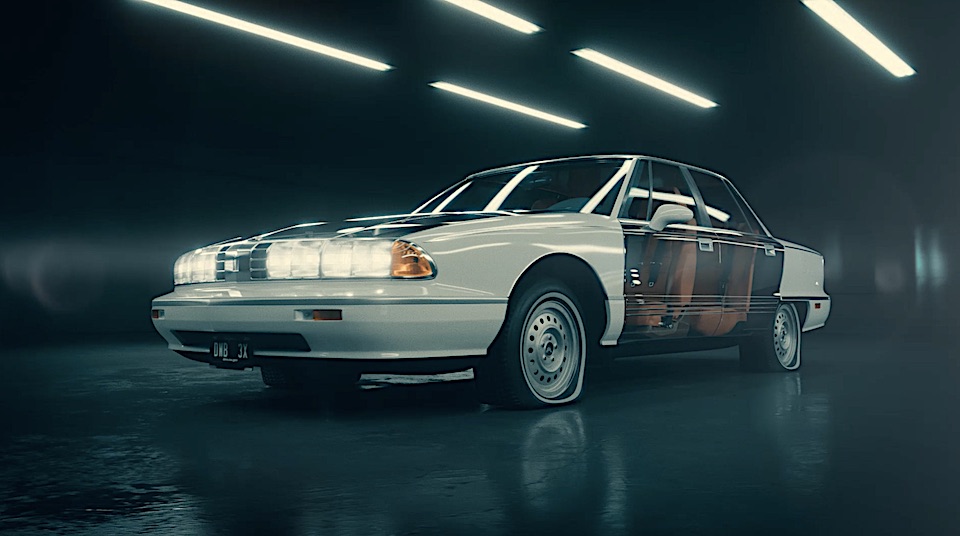
The DWB — built in Unreal Engine 5 by The Mill — was unveiled like a real vehicle. The world-premiere film (narrated by Craig Mitchell) showcases each "safety feature" with the same breathless energy as a luxury launch spot. But every innovation is a direct response to a real incident. 7 of the 11 features were inspired by specific tragedies.
The car itself is inspired by the Oldsmobile that Philando Castile was murdered in.
My Role
As Communication Strategist at Goodby, Silverstein & Partners, I worked alongside creative directors Rony Castor, Tony O'Neill, and Ben Bourgeyne on how this idea moved through culture. My focus was the connections strategy—how the campaign traveled from the Auto Show floor outward to earned media, social, digital, and beyond.
The sequencing challenge was real: this was a provocation, not a product launch. Every touchpoint had to hold both the visual language of automotive advertising and the weight of what it was actually saying. I mapped the media ecosystem around the Detroit Auto Show, identified the journalists and outlets most likely to amplify the message with the right care, and built the narrative framework that would carry the campaign from industry press into mainstream conversation.
The result was global coverage across the US, France, England, and Canada—and a campaign that showed what advertising can do when it doesn't flinch.
The Work
The world-premiere film was shot using Unreal Engine 5 and directed by The Mill's Andrew Proctor — staged as a luxury car reveal, narrated with the same cadence as any automotive ad. The AR experience activated on the Auto Show floor, allowing visitors to walk around the DWB in real-time.